
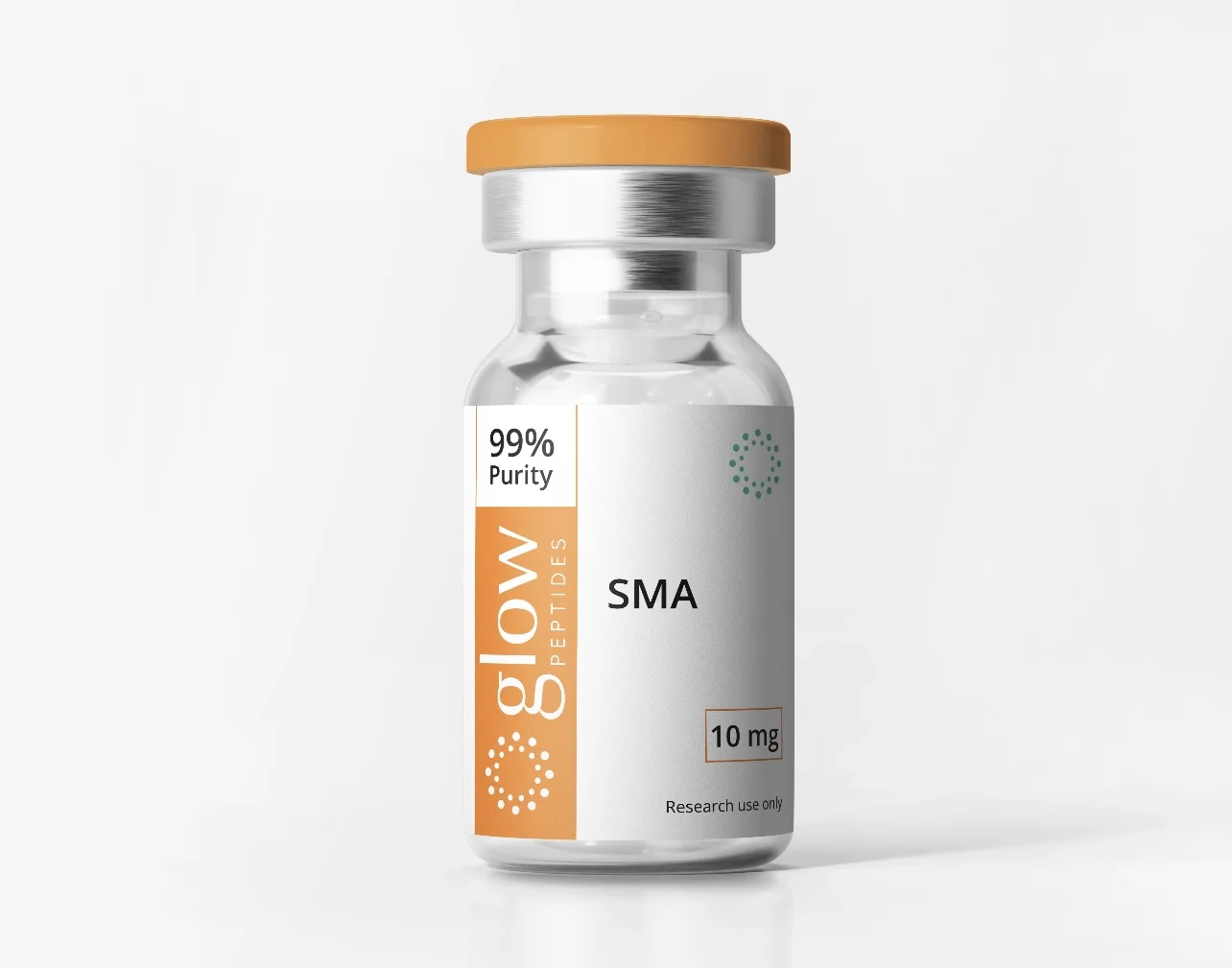
GP-SMA – Semaglutide Peptide
Explore Semaglutide Peptide research information through Glow peptide. GP-SMA is the product name used for this Semaglutide-associated listing. Semaglutide is a synthetic peptide that acts as a glucagon-like peptide-1 (GLP-1) receptor agonist and has been extensively investigated in metabolic and endocrine research. Explore our research peptides category and shop Glow Peptide products online to browse the available research-product listings.
What Is GP-SMA?
GP-SMA is the product name used for this Semaglutide-associated listing. Semaglutide is a synthetic peptide analogue of human glucagon-like peptide-1 (GLP-1). It is designed to activate GLP-1 receptors, which participate in physiological processes involving glucose regulation, insulin secretion and gastrointestinal signalling.
Semaglutide belongs to the wider field of incretin-based pharmacology. Its interaction with GLP-1 receptors has made it an important subject in scientific and clinical research.
The GP-SMA product name does not independently establish a particular formulation, manufacturing source, strength, purity level or regulatory approval. Refer to the actual product specifications and supporting documentation for those details.
Understanding Semaglutide Peptide
Semaglutide is a synthetic peptide analogue of human GLP-1. It acts on GLP-1 receptors and has pharmacological characteristics that distinguish it from naturally occurring GLP-1.
GLP-1 receptors are involved in glucose-dependent insulin secretion and other physiological signalling processes. Semaglutide’s receptor activity has made it an important subject in research involving metabolic regulation and endocrine function.
How Does Semaglutide Interact With GLP-1 Receptors?
Semaglutide acts as a GLP-1 receptor agonist. Its activity is associated with several biological processes:
- Glucose-dependent insulin signalling: GLP-1 receptor activation is involved in insulin secretion when blood glucose levels are elevated.
- Glucagon regulation: GLP-1 signalling participates in the regulation of glucagon secretion.
- Gastrointestinal signalling: GLP-1 receptor activity is associated with changes in gastric emptying.
- Appetite-related pathways: GLP-1 signalling also interacts with pathways involved in appetite regulation.
These are established areas of pharmacological investigation. They should not be interpreted as a guarantee of clinical results from an individual research-product listing.
Why Is Semaglutide Studied?
Semaglutide has received significant scientific attention because of its interaction with GLP-1 receptors and its effects on metabolic signalling.
Research and clinical investigations have examined areas including:
- GLP-1 receptor activation.
- Glucose-dependent metabolic signalling.
- Insulin and glucagon regulation.
- Gastrointestinal physiological processes.
- Appetite-related signalling pathways.
- The pharmacological characteristics of synthetic GLP-1 receptor agonists.
For readers exploring other compounds in this research area, our Retatrutide research information provides another example of a compound studied in metabolic pharmacology. Retatrutide and Semaglutide have different receptor activity profiles and should not be considered interchangeable.
Scientific evidence must be interpreted according to the formulation, study design, population and outcome being investigated. Evidence involving an authorised prescription formulation does not establish the quality or clinical properties of a separate research material.
Semaglutide Research Materials and Prescription Medicines
Semaglutide is the active ingredient in specific authorised prescription medicines. These products have defined formulations, approved indications, manufacturing requirements and prescribing information.
A separately marketed research material should not automatically be considered equivalent to an authorised prescription medicine. The name Semaglutide alone does not establish that a product has undergone the same regulatory review or meets the same manufacturing standards.
Anyone seeking Semaglutide for medical treatment should consult an appropriately qualified healthcare professional and obtain prescription medicines through authorised pharmacy channels.
GP-SMA Product Specifications
When reviewing GP-SMA product information, verify the actual specifications rather than making assumptions based on the product name.
Important details include:
- Product identity: Confirm the compound identified in the listing.
- Presentation: Review the actual product format and packaging.
- Quantity or strength: Check the amount explicitly stated in the product specifications.
- Documentation: Review any available and independently verifiable product documentation.
- Regulatory classification: Understand whether the product is a research material or an authorised prescription medicine.
No particular strength, purity percentage, laboratory-testing result or certification should be assumed unless supported by documentation relating to the actual product.
Explore More Research Products
Browse the Research Peptides collection to explore other listings, or visit our Glow Peptide online shop to view the wider product catalogue.
You can also explore AOD-9604 research information for further reading about a different peptide-derived compound investigated in scientific research.
Scientific References and Further Reading
Readers interested in Semaglutide Peptide research can explore scientific publications covering GLP-1 receptor activity, incretin signalling and metabolic pharmacology.
For scientific literature, consult PubMed’s published research on Semaglutide.
For official information about authorised prescription formulations, consult the FDA Drugs@FDA database.
Important Product Disclaimer
GP-SMA is presented as a research-product listing and is not represented as an authorised prescription medicine. This information is provided for scientific and educational purposes and is not medical advice. Research materials are not substitutes for approved prescription medicines and must not be represented as suitable for personal treatment or self-administration. Regulatory requirements and permitted uses vary by jurisdiction.
Frequently Asked Questions About GP-SMA
What is GP-SMA?
GP-SMA is the product name used for this Semaglutide-associated listing. Refer to the current product specifications for its exact presentation, quantity and available documentation.
What is Semaglutide Peptide?
Semaglutide is a synthetic peptide that acts as a GLP-1 receptor agonist. It has been studied for its involvement in metabolic and endocrine signalling pathways.
How does Semaglutide interact with GLP-1 receptors?
Semaglutide activates GLP-1 receptors, which participate in glucose-dependent insulin secretion and other physiological processes involving metabolic and gastrointestinal signalling.
Is GP-SMA equivalent to an approved Semaglutide medicine?
A research-product listing should not be assumed to be equivalent to an authorised prescription medicine. Regulatory approval applies to specific products, formulations and authorised indications.
What should I check when reviewing GP-SMA?
Review the product identity, stated quantity, presentation, regulatory classification and any available independently verifiable documentation.
Where can I find scientific information about Semaglutide?
PubMed provides access to scientific publications concerning Semaglutide, GLP-1 receptor activity and metabolic research. The FDA database provides official information about authorised prescription products.
Be the first to review “GP-SMA”
Related products

Reviews
There are no reviews yet.